


What is Hospital Bandage
A hospital bandage is a piece of material used either to support a medical device such as a dressing or splint, or on its own to provide support for the movement of a part of the body. When used with a dressing, the dressing is applied directly on a wound, and a bandage used to hold the dressing in place.
Why Choose us
Quality Assurance
The company has 300 employees and covers an area of 40000㎡.It has the purification workshop which meets the CMP standard,the quality inspection center.
Professional service
We can accept factory inspection and goods inspection at any time. Technical discussion, research and development of new products, and complete after-sales service.
Fantastic customer service
Nothing is more important to us than customer satisfaction. With our ‘can-do attitude’ we ensure our customers’ expectations are exceeded at all times – from delivering great solutions on time to providing advice and resolving queries as quickly as possible.
-
![Gauze Bandage]() Gauze BandageGauze bandages are widely used in homes and medical places. Gauze bandages are common medical supplies. They are generally used to wrap wounds or affected areas.read more
Gauze BandageGauze bandages are widely used in homes and medical places. Gauze bandages are common medical supplies. They are generally used to wrap wounds or affected areas.read more -
![Elastic Bandage]() Elastic BandageAn elastic bandage is a stretchable bandage used to create localized pressure. Elastic bandages are commonly used to treat muscle sprains and strains by reducing the flow of blood to a particularread more
Elastic BandageAn elastic bandage is a stretchable bandage used to create localized pressure. Elastic bandages are commonly used to treat muscle sprains and strains by reducing the flow of blood to a particularread more -
![Gauze Bandage]() Gauze BandageBandages are used to wrap wounds or affected areas. They are common medical supplies. There are many different types and methods of dressing.read more
Gauze BandageBandages are used to wrap wounds or affected areas. They are common medical supplies. There are many different types and methods of dressing.read more -
![Disposable Medical Bandage]() Disposable Medical BandageIf the bandage is used correctly, it can not only help the wound heal, but also avoid infection or other secondary injuries to the wound.read more
Disposable Medical BandageIf the bandage is used correctly, it can not only help the wound heal, but also avoid infection or other secondary injuries to the wound.read more -
![Elastic Bandage]() Elastic BandageWhen using a bandage, it is best to wear protective gloves to prevent the wounded bacteria from infecting the wound.read more
Elastic BandageWhen using a bandage, it is best to wear protective gloves to prevent the wounded bacteria from infecting the wound.read more -
![Bandage Roll]() Bandage RollBreathable mesh cloth with holes on the surface to wick away perspiration and breathability.read more
Bandage RollBreathable mesh cloth with holes on the surface to wick away perspiration and breathability.read more -
![Surgical Gauze]() Surgical GauzeIn order to prevent the wound from deepening due to some accidental touch, or because of the fine gap between the bandages.read more
Surgical GauzeIn order to prevent the wound from deepening due to some accidental touch, or because of the fine gap between the bandages.read more


Benefits of Hospital Bandage
Cost-effectiveness
When less frequent dressing changes are required, hospital bandage are found to be the least expensive dressing method available. However, their cost-effectiveness should be put into perspective by considering other factors. These include frequency of dressing change, wound healing time, patient discomfort, and the need for dedicated nursing.
Ease of use
As hospital bandage are one of the oldest dressing materials available, the majority of healthcare providers are familiar with its use. Hospital bandage remain popular because of their ease of use. They can be packed into areas which might be inaccessible to other wound dressing types.
Versatile
Hospital bandage are available in a variety of shapes and sizes. Some of their forms include rolls, strips, ribbons, and pads.

What Are Hospital Bandage Used For?
Lymphedema and Edema
Both conditions are characterized by swelling due to fluid accumulation, typically in the arms or legs. This can occur as a result of damage to the lymphatic system or venous insufficiency. Hospital bandage help reduce swelling by improving lymphatic and venous flow, directing fluid away from the affected area.
Varicose Veins and Venous Insufficiency
Varicose veins are enlarged, twisted veins that often occur in the legs due to weak or damaged vein walls or valves. Similarly, venous insufficiency is a condition where the flow of blood through the veins is inadequate, causing blood to pool in the legs. Hospital bandage aid in these conditions by providing support to the veins, improving blood flow, and reducing discomfort and swelling.
Deep Vein Thrombosis (DVT)
DVT is a serious condition where a blood clot forms in a deep vein, usually in the leg. Hospital bandage can be used as part of the treatment to improve blood flow, which helps to prevent clotting and reduce swelling and pain.
Post-Surgical Recovery
After certain surgical procedures, especially those involving the legs or feet, doctors often recommend hospital bandage. They help control swelling, improve circulation, and speed up the healing process.
Injury Prevention and Recovery
For athletes or physically active individuals, hospital bandage can be used to prevent injuries by providing support and stability to muscles and joints. Post-injury, they can reduce swelling and speed up recovery.
Chronic Wounds and Ulcers
Hospital bandage are integral in the treatment of chronic wounds and ulcers, such as venous leg ulcers. By improving circulation and reducing swelling, they promote wound healing and prevent recurrence.
Sprains and Strains
Hospital bandage can provide relief and promote healing in case of sprains and strains by reducing swelling and providing support and stability to the injured area.
The key points when applying a hospital bandage are:
Make sure the person is comfortable and tell them what you're doing Work from the side of the injury so you do not have to lean across their body Keep the injured part of the body supported in the position it'll be in when the hospital bandage is on Use the right size hospital bandage – different parts of the body need different widths of hospital bandage Avoid covering fingers or toes when bandaging a limb so you can easily check the circulation Apply the hospital bandage firmly, but not tightly, and secure the end by tucking it in securely. You can also use a safety pin, tape or a hospital bandage clip
As soon as the hospital bandage is on, ask if it feels too tight and check the circulation by pressing on a fingernail or a piece of skin until it turns pale. If the colour does not return after 2 seconds, the hospital bandage may be too tight, so you should loosen it. Limbs can swell up after an injury, so check the circulation every 10 minutes after you have put the hospital bandage on
There are different types of roller hospital bandage, including:
Hospital bandages made of open-weave material – these allow ventilation, but do not put pressure on wounds and do not support joints
Elasticated hospital bandages – these mould to a person's body shape, and are used to secure dressings and support soft tissue injuries like sprains
Crepe hospital bandages – these are used to give firm support to injured joints
To apply a roller hospital bandage:
Keep the rolled part of the hospital bandage above the injury and the unrolled part below the injury Begin by wrapping twice around the injury to hold the end in place Work from the inside to the outside of the limb, winding the hospital bandage in spiralling turns, making sure that each new layer covers 2 thirds of the previous one Finish by wrapping the hospital bandage around once more and securing the end
When applying hospital bandages to elbows and knees to hold dressings in place or support sprains or strains, flex the joint slightly, apply the hospital bandage in a figure of 8, and extend the hospital bandage quite far on each side of the joint.
When applying hospital bandages on hands to hold dressings in place or support sprains and strains, wrap the hospital bandage around the wrist twice. Then work from the inside of the wrist using diagonal turns across the back of the hand to the end of the little finger, leaving the thumb free. When you've covered the hand, wrap the hospital bandage around the wrist twice and fasten the end.
Tubular hospital bandages are used to hold dressings on fingers or toes, or support injured joints. They're made of seamless fabric tube.
You can get elasticated ones to place over joints such as the ankle. Ones made of tubular gauze can be placed over fingers or toes, but do not provide any pressure to stop bleeding.
Before placing a tubular hospital bandage over an injury, you may need to cut it to a smaller size.
Triangular hospital bandages can be used as large dressings, as slings to support a limb, or to secure a dressing in place.
If you're using a triangular hospital bandage as a sling on an arm, you use it opened out.
You should:
Ask the person to hold their arm across their chest and support the arm while you work Put the hospital bandage under the arm and around the back of the neck Put the other half of the hospital bandage over the arm to meet at the shoulder and tie into a knot Adjust the hospital bandage so that it supports the full length of the arm up to the end of the little finger Tuck the loose ends of the hospital bandage in at the elbow, or use a pin.
5 Proven Tips For Choosing The Right Hospital Bandage
Assess your skin type
Before diving into the diverse array of hospital bandages available, take a moment to assess your skin type. Skin sensitivity varies from person to person, and choosing a hospital bandage that complements your skin is essential for comfort and effective wound healing. For those with brown skin, consider options explicitly designed for diverse skin tones, ensuring that the adhesive is gentle and won't cause irritation.
Understand wound requirements
Different wounds demand different types of care. For minor cuts and scrapes, a standard adhesive hospital bandage may suffice, but deeper wounds or surgical incisions may require specialized hospital bandages with additional features like extra padding or antimicrobial properties. Matching the hospital bandage to the wound's specific needs ensures a more tailored and effective healing process.
Consider material compatibility
Hospital bandages come in various materials, each offering unique benefits. For those with sensitive skin or specific material preferences, exploring options such as hypoallergenic or latex-free hospital bandages can prevent unwanted skin reactions. Prioritize comfort and compatibility to make the healing process as seamless as possible.
Opt for breathability
Proper airflow is crucial for wound healing, as it reduces the risk of infection and promotes faster recovery. When choosing a hospital bandage, look for breathable materials that allow air circulation while still providing a secure seal. This is particularly important for individuals with brown skin, as breathable hospital bandages contribute to overall skin health and minimize the risk of complications.
Size matters
Selecting the right-sized hospital bandage is a fundamental but often overlooked aspect of wound care. A hospital bandage that is too small may not adequately cover the wound, risking exposure to contaminants, while an oversized one may hinder the healing process. Take the time to measure and assess the wound, choosing a hospital bandage that provides the optimal balance of coverage and comfort.
In the intricate landscape of wound care, the optimal hospital bandage transcends its role as a mere protective layer, evolving into a tailored solution for unparalleled healing. By carefully considering factors such as skin type, wound specifications, material compatibility, breathability, and size, you empower yourself to make choices that prioritize both comfort and efficacy
What Types Of Yarns Are Used In Hospital Bandage?

Natural yarns
Regarding natural yarns, the most commonly used in hospital bandage are cotton and viscose. Cotton is a natural fiber and does not generate allergies. Some of its main characteristics are that it is biodegradable, its absorption capacity is low and it gives body to the bandage fabric. To achieve a higher absorption capacity, cotton must undergo a hydrophilization process.
Cotton is found in a wide range of hospital bandage, among which are crepe hospital bandage, cohesive hospital bandage or compressive hospital bandage. Its main disadvantage is that it has a higher price than synthetic or viscose yarns.
Viscose is noted for its ability to absorb liquids—superior to that of cotton—and it does not generate allergies. It is mainly used to retain those liquids and keep the covered area dry. It has elastic and resistant properties very similar to cotton but at a lower cost.

Synthetic yarns
Synthetic yarns are usually derived from petroleum and there are different yarns for different uses.
Polyester is inelastic and is heavily used in common fabrics such as shirts, sheets, table linen, etc. Due to its low cost. It is a continuous fiber that when extracted from petroleum is a very fine yarn, so it is not worked alone but grouped in a set of filaments (28 filaments or 120 filaments for example). In addition, we have yarns that only provide elasticity to the bandage, such as polyamide and polybutylene terephthalate (known in the industry as pbt).
Polyamide is a synthetic yarn derived from petroleum, which is elastic and consists of many long and very fine fibers. It has a high elastic capacity and is present in many hospital bandage such as support or cohesive hospital bandage. An example of a synthetic polyamide is nylon.
Pbt is a variation of polyester that also provides elasticity to hospital bandage but without endowing them with compressive properties on their own. Pbt is now becoming popular because it has very similar properties to polyamide but is less expensive.
Elastane is used as a substitute for elastic or natural rubber yarn. This yarn, being a petroleum derivative, does not contain latex but has properties very similar to natural rubber, making it a very suitable substitute to avoid latex allergies. As a result, elastane is increasingly being marketed and used in sanitary hospital bandage.
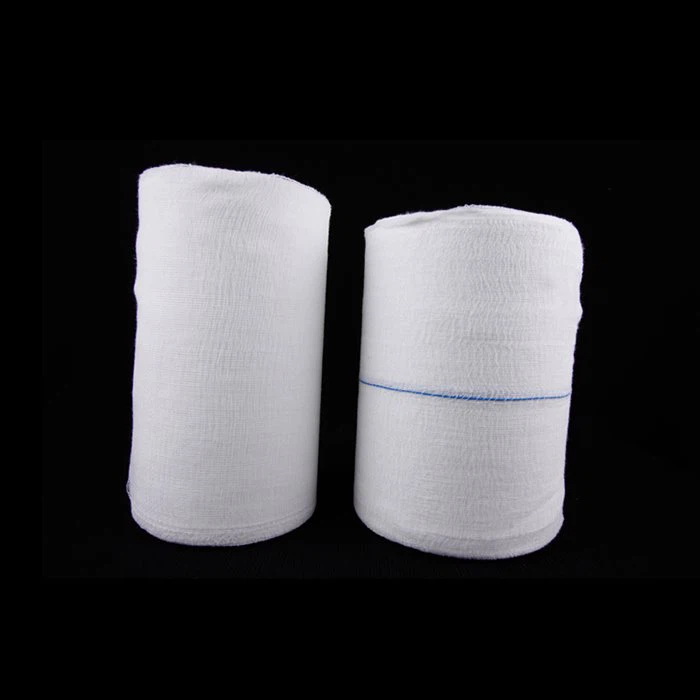
Non woven fabrics
Finally, and so as not to leave out any type of fabric used in the most common hospital bandage, we have the nonwoven fabric hospital bandage. These hospital bandage consist of a mixture of synthetic materials (such as polyester and polyamide) and in some cases natural yarns. Non woven fabrics also have the property that they are thermoweldable, that is, at a certain temperature the synthetic fibers fuse and remain joined with each other. Natural fibers are not welded. The welding is done by taking fibers of between 1 and 3 cm long and other microscopic fibers that are sprinkled on the larger fibers. Once the two have been put together, pressure and heat are used to create the final fabric.
Our Factory
Hebei ZOJE Medical Equipment CO.,Ltd.Founded in 2012.Our company is a research and development, production and sales of medcal equipment co.LTD. We produce medium and high-end medical device products.
With a strong technical strength and rich professional experience dedicated to human civilization and health.The company has 300 employees and covers an area of 40000㎡.It has the purification workshop which meets the CMP standard,the quality inspection center. Our company mainly produces disposable sterile infusion apparatus,disposable sterile syringe,disposable dispensing syringe,insulin needle and all kinds of accessories. Our tenet is "keep improving,striving for perfection"

Asked Questions