Hebei ZOJE Medical Equipment CO.,Ltd.Founded in 2012.Our company is a research and development, production and sales of medcal equipment co.LTD. We produce medium and high-end medical device products. With a strong technical strength and rich professional experience dedicated to human civilization and health.The company has 300 employees and covers an area of 40000㎡.
Our factory
Hebei ZOJE Medical Equipment CO.,Ltd.Founded in 2012.Our company is a research and development, production and sales of medcal equipment co.LTD. We produce medium and high-end medical device products. With a strong technical strength and rich professional experience dedicated to human civilization and health.The company has 300 employees and covers an area of 40000㎡.
Quality assurance
We has the purification workshop which meets the CMP standard,the quality inspection center.
Our product
Our company mainly produces disposable sterile infusion apparatus,disposable sterile syringe,disposable dispensing syringe,insulin needle and all kinds of accessories.
Our service
We try and respond to all concerns within 24 hours and our teams are always at your disposal in case of any emergencies.

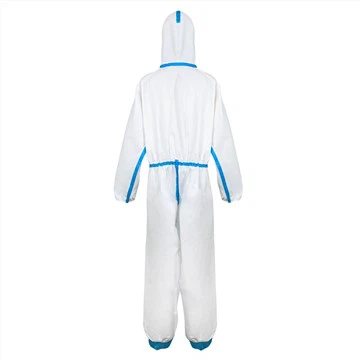
Surgical gowns, as a necessary protective clothing during surgery, are used to reduce the risk of medical staff contacting pathogenic microorganisms.

Disposable Medical Surgical Gown
It can also be widely used in military, medical, chemical, environmental protection, transportation, epidemic prevention and other fields.

Disposable Sterile Surgical Clothing
The performance of surgical gown mainly includes barrier performance and comfort performance.

Normally we do samples for you to confirm everything, and production will be same as samples.

The special designed can let the doctors feel light and comfortale during long time operation.
What Is Surgical Gown
Surgical gowns are mainly used by medical staff in operating rooms. The fabrics used in surgical gowns belong to medical shielding fabrics, so the requirements for fabrics are higher. Surgical gowns are mainly divided into reusable surgical gowns and disposable surgical gowns. Regular cotton fabrics, high-density polyester acetate fabrics, and polyethylene/TPU/PTFE multilayer laminates are mainly used for reusable surgical gowns. Disposable surgical gowns are mainly SMS/SMMS surgical gowns, SMS or SMMS non-woven surgical gowns, and the reinforcing sheet is made of non-woven composite materials.
Advantages of Surgical Gown
Reduce the risk of infection
The most obvious benefit of wearing surgical gowns is that they help protect patients from contracting infections caused by healthcare workers. In most cases, these infections are caused by bacteria and viruses that live on the skin and come in contact with the patient.
Safeguard your clothing and skin
Another important reason to wear surgical gowns while caring for patients is that they safeguard your clothing and skin. If you're not wearing protective clothing, you could transfer your skin germs, pathogens and bodily fluids to the patient and their wounds.
Protect yourself from bodily fluids and other contaminants
Another key reason why you need to wear surgical gowns while in close contact with patients is that they offer protection from bodily fluids and other contaminants. Some patients May be infected with blood-borne pathogens and other harmful substances that can get on the clothing of healthcare workers and be transmitted to others if not properly cleaned.
Maintain aseptic technique when handling patients
Another important reason why you need to wear a surgical gown while treating patients is that it helps maintain aseptic technique when handling patients. A surgical gown provides a barrier between your skin and the patient's skin.
A surgical gown is a personal protective garment used by healthcare staff during surgical procedures to protect both the patient and the healthcare personnel from transmitting pathogens, bodily fluids, and particulate matter.
National guidelines have defined vital protection zones due to the controlled nature of surgical procedures. The critical or protection zones encompass the front body from the top shoulder to the knees. And the arms from the wrist cuff to the above elbow.
The barrier requirements for surgical gowns and other protective gear are based on the anticipated location and degree of liquid contact, given the predicted use conditions. The critical zones include regions where direct contact with blood, bodily fluids, and potentially infectious materials occurs, while areas outside the critical zones can also be sprayed or splashed accidentally.
In addition, the surgical gowns are made of impermeable material or a water-resistant, tightly woven fabric, and they have been found to reduce bacterial counts in the operating room. The impact of contamination via this pathway on the development of surgical site infection is unknown.
Sterile surgical gowns are not normally required for most dermatologic operations. However, they may be considered protective clothing for liposuction or other treatments that expose the patient to bodily fluids.
Furthermore, all types of surgical gowns must be sterile and clearly labeled as such. The FDA classifies a surgical gown type as a Class 2 medical device that requires a 510(k) premarket notification. This is available insurgical gowns manufacturers.
The Hospital's Requirements for Surgical Gowns
No matter what kind of fabric the surgical gown is, it needs to meet the three attributes of the surgical gown in order to become a qualified surgical gown, so there are strict regulations and requirements for medical clothing. If the surgical gown is substandard, it may cause fatal consequences, so what are the hospital requirements for surgical gowns?
The fabric will not pill or deform after washing. One thing most people don't know is that fabrics must be resistant to chlorine bleach. The gown should be fit, comfortable to wear and easy to operate. If the surgical gown needs to be sterilized at high temperature and high pressure, cotton fabric must be used.
Therefore, it can be seen that surgical gowns have high requirements on fabrics. The use of professional medical textile fabrics to make surgical gowns is to protect doctors and patients so that surgery can be performed safely and effectively. Technology is constantly developing and brings us innovations, and surgical gown fabrics are constantly improving. Therefore, fabrics of all professional surgical gowns have always been the best surgical gown fabrics and have been recognized by national patents.
Surgical gowns use two fabrics. The front and sleeves are made of Dieter silk fabric, which is impermeable and breathable, and can prevent blood splashing during surgery and effectively block the penetration of microorganisms; the back is made of Shudis fabric, which has good moisture absorption, moisture conduction and heat dissipation. After absorbing moisture and heat from the skin, the inner surface of the fabric can quickly transfer the absorbed moisture and heat to the outer surface and distribute them quickly. Long-term wear will keep you dry and comfortable, and its service life is long. The common features of these two fabrics are antistatic, impermeable, non-flocculating, lightweight, durable, and non-fading. Two kinds of fabrics are used in the surgical gown sterile, which are adapted according to specific conditions. The characteristics of the two kinds of fabrics can be fully displayed, which greatly protect both doctors and patients.
Testing Surgical Gown
With so many strict standards in place, it's no surprise that a gown must undergo many different tests before sale. After all, a gown that can't live up to its promises can create a severe health hazard.
Gowns intended for levels 1-3 are subject to impact penetration and hydrostatic pressure tests from the American Association of Textile Chemists and Colorists.
Impact penetration
Impact penetration tests reflect a gown's ability to resist fluid spatters. This test involves putting blotter paper behind the material, then spraying a specific volume of water onto it. Less water penetration equals better protection. Level 1 gowns must have results less than or equal to 4.5 grams, while Levels 2 and 3 must be less than or equal to 1 gram.
Hydrostatic pressure
Hydrostatic pressure testing measures how well the material resists water penetration under contact with increasing pressure. As with impact penetration, less water moving through the material indicates better performance. Level 1 gowns do not undergo testing for hydrostatic performance, and Level 2 and 3 gowns must achieve results greater than or equal to 20 centimeters and 50 centimeters, respectively.
Both testing processes use water, but water has a much higher surface tension than blood. That means blood can penetrate through fabrics more easily. It's critical to keep this in mind, because a fluid-resistant gown does not necessarily offer protection from blood.

Things to Consider When Choosing a Surgical Gown
A good fit
Gowns should fit well for comfort and safety. Surgical gowns should not be skin tight so that the skin absorbs any spills through the fabric but also not so lose they get in the way of working or cause trip hazards.
Strength
Gown fibres and stitching need to be strong and resistant to tearing.
Breathable
Gowns should be breathable for wearers comfort and prevent overheating which produces sweat.
Diversity
Healthcare workers come in all shapes and sizes. Uniformed gowns need to cater for and comfortably fit a diverse range of body shapes.
Laundry
Gowns must be easy to wash and durable enough not to deteriorate after a few washes. The dye of gowns should also be considered so they do not bleed and fade easily.
Costs
At the end of the day every facility has a budget. Busy healthcare settings can have a high-turn over of gowns which is why cost-effectiveness of the gown is critical.
How Much Protection Should Your Surgical Gown Provide?
Different types of Surgical Gowns offer varying levels of protection. The FDA recognizes the four levels of protection outlined by the American National Standards Institute (ANSI) and the Association of the Advancement of Medical Instrumentation (AAMI). Increasing in protection from one to four, these levels indicate the type of procedures a specific Gown is suited for.
Level 1
Designed for minimal risk operations, Level 1 Surgical Gowns are ideal for basic care, standard isolation, and cover Gowns for visitors.
Level 2
Intended for low risk procedures, Level 2 Surgical Gowns are designed for blood draw, suturing, and to be worn in the intensive care unit or pathology lab.
Level 3
For use in moderate risk environments, Level 3 Surgical Gowns are perfect for arterial blood draw, inserting an IV line, and to be worn in the emergency room and during trauma cases.
Level 4
Level 4 Surgical Gowns are designed for long, high risk, high fluid procedures, or situations in which infectious diseases are thought to be present.
How To Wear a Surgical Gown Correctly?
Properly wearing a surgical gown is essential for maintaining a sterile environment during medical procedures. Here are ten steps to follow when donning a surgical gown:
First step
Wash your hands thoroughly before touching the gown.
Second step
After drying both hands and arms, then grasp the doctor gown and step into an area where the gown May be opened without risk of contamination. Put both hands into armholes. Hold the gown away from the body, and allow it to unfold completely.
Third step
Reach hands and forearms into armholes and sleeves; keep hands at shoulder height and away from the body.
Fourth step
If you are open glove donning, pull cuff to thumb level. If you are closed glove donning, push the hands to the edge of the cuff.
Fifth step
The circulating nurse should pull the gown over shoulders, touching only the inside of the gown.
Sixth step
The circulating nurse should arrange hook and loop fixation.
Seventh step
The circulating nurse should tie the inner belt of the gown.
Eighth step
Then don gloves. After gloving, grasp the belt card with both hands, separate the left outer belt from the belt card and keep the belt in the left hand.
Ninth step
Hand the belt card to the circulating nurse, then make a three-fourth turn to the left while the circulating nurse extends the outer belt to its full length.
Tenth step
Retrieve the outer belt by pulling it out of the belt card held by the circulating nurse and tie it together with the other outer belt on the left-hand side.
Our factory
Hebei ZOJE Medical Equipment CO.,Ltd.Founded in 2012.Our company is a research and development, production and sales of medcal equipment co.LTD. We produce medium and high-end medical device products. With a strong technical strength and rich professional experience dedicated to human civilization and health.The company has 300 employees and covers an area of 40000㎡. We has the purification workshop which meets the CMP standard,the quality inspection center. Our company mainly produces disposable sterile infusion apparatus,disposable sterile syringe,disposable dispensing syringe,insulin needle and all kinds of accessories.


FAQ