Hebei ZOJE Medical Equipment CO.,Ltd.Founded in 2012.Our company is a research and development, production and sales of medcal equipment co.LTD. We produce medium and high-end medical device products. With a strong technical strength and rich professional experience dedicated to human civilization and health.The company has 300 employees and covers an area of 40000㎡.
Our factory
Hebei ZOJE Medical Equipment CO.,Ltd.Founded in 2012.Our company is a research and development, production and sales of medcal equipment co.LTD. We produce medium and high-end medical device products. With a strong technical strength and rich professional experience dedicated to human civilization and health.The company has 300 employees and covers an area of 40000㎡.
Quality assurance
We has the purification workshop which meets the CMP standard,the quality inspection center.
Our product
Our company mainly produces disposable sterile infusion apparatus,disposable sterile syringe,disposable dispensing syringe,insulin needle and all kinds of accessories.
Our service
We try and respond to all concerns within 24 hours and our teams are always at your disposal in case of any emergencies.

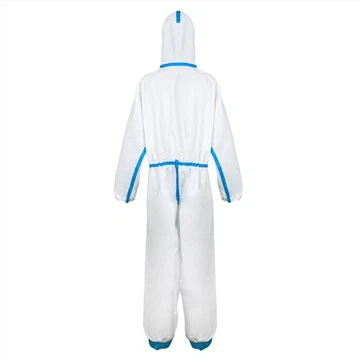
Surgical gowns, as a necessary protective clothing during surgery, are used to reduce the risk of medical staff contacting pathogenic microorganisms.

Disposable Medical Surgical Gown
It can also be widely used in military, medical, chemical, environmental protection, transportation, epidemic prevention and other fields.

Disposable Sterile Surgical Clothing
The performance of surgical gown mainly includes barrier performance and comfort performance.

Normally we do samples for you to confirm everything, and production will be same as samples.

The special designed can let the doctors feel light and comfortale during long time operation.
Disposable surgical gowns are gowns that are meant to be worn only once and then disposed of. They are usually made from materials such as cotton, polyester, or a blend of both. They usually have a waterproof and breathable finish. Some disposable surgical gowns come with pockets for holding instruments or other supplies. Disposable surgical gowns are often used in medical procedures such as surgery. They are made of a soft fabric and are disposable, meaning that once the procedure is over, the gown can be thrown away. The gown helps protect you from potential infection and keeps you warm. If you are going to have surgery, it is always best to wear a disposable surgical gown.

Advantages of Disposable Medical Surgical Gown
Protection against infection
One of the primary advantages of disposable medical surgical gowns is their ability to prevent the spread of infection. During surgical procedures, healthcare professionals work in an environment that is highly susceptible to pathogens and infectious agents. The use of disposable medical surgical gowns provides an additional layer of protection against such infections.
Easy to use and dispose of
Another significant advantage of disposable medical surgical gowns is their convenience. When compared to reusable gowns, disposable gowns are easier and faster to put on. The use of disposable gowns eliminates the need for laundering, sterilization, and maintenance, reducing the workload of healthcare professionals. The disposable gowns can be easily disposed of, reducing the risk of cross-contamination.
Cost-effective
Disposable medical surgical gowns are cost-effective when compared to reusable gowns. Reusable gowns require regular laundering, sterilization, and maintenance, which can be expensive and time-consuming. Disposable gowns eliminate these processes, reducing the overall cost of gowning for healthcare providers.
Environmentally friendly
Disposable medical surgical gowns are a sustainable alternative to reusable gowns. Reusable gowns require the use of chemical detergents and sterilization processes that are harmful to the environment. On the other hand, disposable gowns are made from bio-degradable materials that degrade over time, causing less harm to the environment.
Most of the gowns were constructed from 3 to 5 major pieces.Although many of the gowns had no seams at the side,they had front and back panels defined clearly by the sleeve placement. The fronts of the gowns were continuous with no seams or breaks in the fabric surface. This is extremely important as the front of the torso is a critical area for barrier performance.
The back was composed of two overlapping panels providing access for donning and doffing. Ties, used in various locations to secure the gowns, were typically nonwoven strips similar to the material used to construct the gown.
To close the body of the gowns, mechanisms were attached to the right and left back panels. The right back panel had an internal tie attached approximately 20" down from the shoulder. It also had an external tie attached about 20" from center back. The corresponding tie was on the shoulder. Several of the gowns had a location where the exterior tie was stitched onto the front panel for added strength and to restore the compromised barrier. The lest back panel had a tie located on the outside usually about 20" below the back neck in the center.
The necklines of the hospital gowns usually were closed by hook and loop tape, easy and convenient. The loop component of the taps was placed at the neckline of the left back panel. The corresponding hook component was found on the right back panel. The hook component is about 1.5" long, and the loop component 7" long providing great flexibility and accuracy in the neckling fit.
The sleeve edges were contained with a rib knit cuff stitched on at the wrist. In use, surgical gloves are worn pulled up over the cuffs, so it is important for the cuffs to fit snugly.
Disposable surgical gowns are typically made of thick, absorbent cotton cloth and are designed to protect the wearer. They are also designed to keep the wearer warm and dry. Disposable surgical gowns work by providing two-way protection. First, the gown blocks harmful biological agents from entering the body through the skin and prevents them from spreading throughout the hospital or medical facility. They also help to prevent cross-contamination, which can lead to serious health problems.

Difference Between Disposable Medical Surgical Gown and Reusable Medical Surgical Gown
While all reusable gowns met minimum requirements for impact penetration and hydrostatic pressure water resistance, the disposable gowns in this study did not. For impact penetration, only the L3 disposable gown met requirements. This could be reflective of the L3 gown's fabric thickness and fabric weight, both of which are more than twice that of the L1 and L2 disposable gowns. Fabric thickness and weight are known to be related to protection.
The disposable gowns are made from diverse non-woven materials which have better plasticity features. These gowns are made by different fiber joining techniques to increase their toughness which is why these are more resistant to wear and tear.
These gowns are made in a way to acts as a barrier between the spreading of different infections and micro-organisms. These gowns are of two types i.e., waterproof and non-waterproof. The FDA classifies Disposable Medical Gowns as Class II medical devices that are subject to stringent pre-review and standards. Non-surgical isolation gowns, on the other hand, are Class I, and not subject to prior review, making them an ideal item for which other manufacturers and volunteers may fill in the gaps.
Talking about appearance, disposable isolation gowns and protective gowns are commonly used as compared to disposable cloth medical surgical gowns. Surgical medical gowns can be used in place of the other two gowns requirements but not the other way around.
Different Level Criteria of Disposable Medical Surgical Gown
The ANSI/AAMI PB70 standard has 4 levels of fluid barrier protection, with Level 1 being the lowest level of protection and Level 4 being the highest.
Level 1
Minimal risk, to be used, for example, during basic care, standard isolation, a cover gown for visitors, or in a standard medical unit.
Level 2
Low risk, to be used, for example, during the blood draw, suturing, in the Intensive Care Unit (ICU), or a pathology lab.
Level 3
Moderate risk, to be used, for example, during the arterial blood draw, inserting an intravenous (IV) line, in the Emergency Room, or for trauma cases.
Level 4
High risk, to be used, for example, during long, fluid intense procedures, surgery, when pathogen resistance is needed, or infectious diseases are suspected (non-airborne)
How To Manufacture Disposable Medical Surgical Gown: A Comprehensive Guide
Disposable medical surgical gowns are essential in ensuring the safety of both medical practitioners and patients during surgical procedures. It is crucial that these gowns are not only sterile but also provide adequate protection from infection and contamination. In this article, we will explore the steps involved in manufacturing sterile disposable medical surgical gowns.
Gathering raw materials
The first step in manufacturing sterile disposable medical surgical gowns is to gather the raw materials required for production. These materials include non-woven fabric, elastic bands, thread, and sterilization pouches. It is important to choose high-quality raw materials that meet the necessary standards for surgical gowns, such as the aami level 3 standard.
Cutting the fabric
Once the raw materials are gathered, the next step is to cut the non-woven fabric into the desired size and shape of the gown. This is done using a cutting machine, which ensures that the fabric is cut precisely and efficiently.
Sewing the fabric
Once the fabric is cut, it is then sewn together to form the gown. The gown is sewn in such a way that it covers the entire body, providing adequate protection from contamination and infection. The gown should also have adequate openings for the arms, which can be tightened using the elastic bands.
Sterilization
After the gown has been sewn, it is then subjected to sterilization. This is done to ensure that the gown is free from any bacteria or other microorganisms that could cause infection. The gown is typically sterilized using ethylene oxide gas, which is known for its effectiveness in sterilizing medical equipment.
Packaging
Once the gown has been sterilized, it is then packaged in a sterile environment. This is done to ensure that the gown remains sterile until it is used. The gown is typically packaged in a sterilization pouch, which is made of a special material that allows for sterilization but also prevents contamination.
Quality control
Finally, it is important to perform quality control checks on each gown to ensure that it meets the necessary standards. This includes checking the gown for any defects, such as holes or tears, and ensuring that it is sterile.
Our factory
Hebei ZOJE Medical Equipment CO.,Ltd.Founded in 2012.Our company is a research and development, production and sales of medcal equipment co.LTD. We produce medium and high-end medical device products. With a strong technical strength and rich professional experience dedicated to human civilization and health.The company has 300 employees and covers an area of 40000㎡. We has the purification workshop which meets the CMP standard,the quality inspection center. Our company mainly produces disposable sterile infusion apparatus,disposable sterile syringe,disposable dispensing syringe,insulin needle and all kinds of accessories.


FAQ